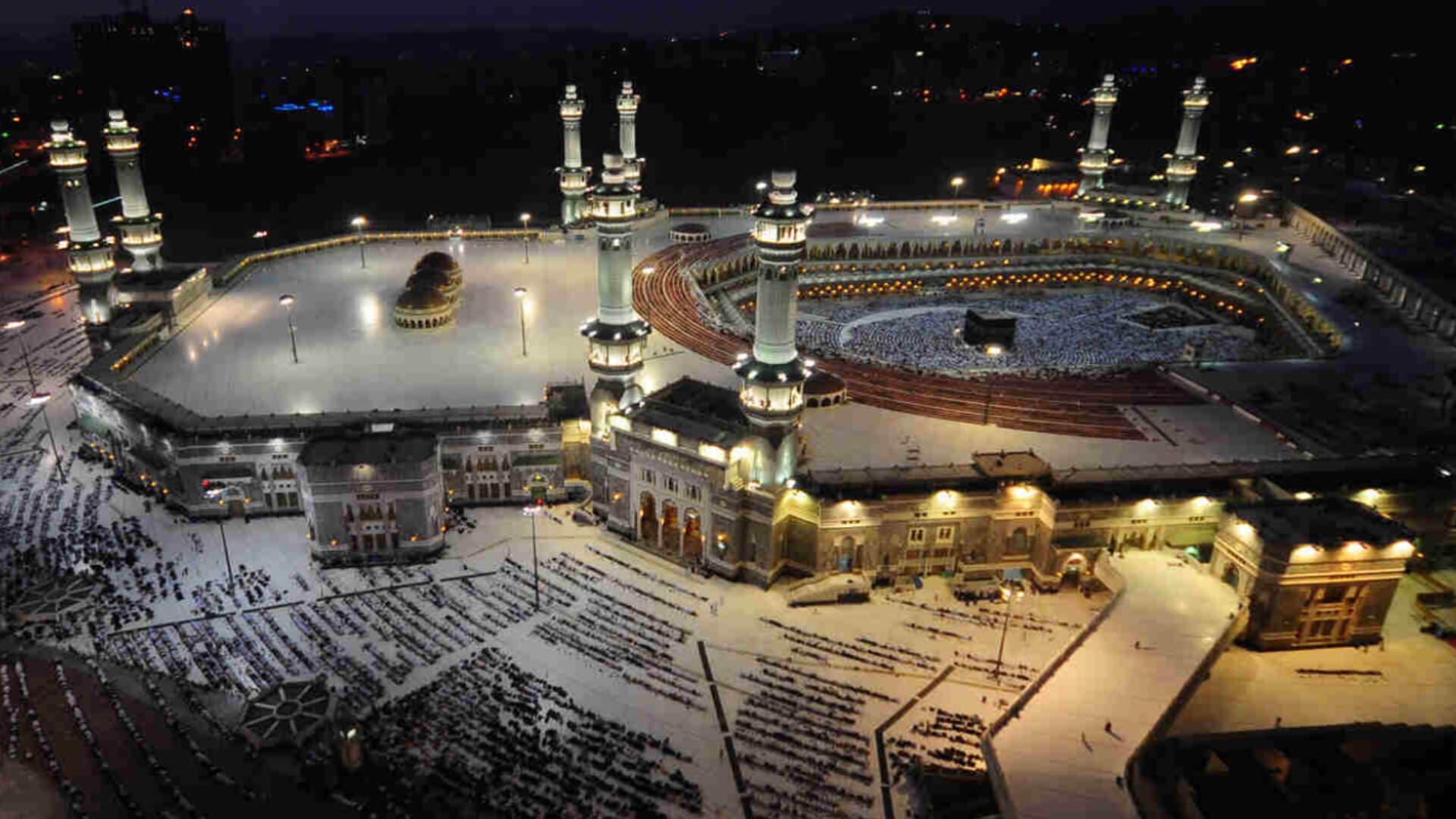
What Is Umrah?
Umrah is known as the "lesser pilgrimage." It can be performed at any time of the year, is usually completed within a single day, and is not obligatory in Islam — though it carries immense spiritual reward, particularly when performed during Ramadan.
The word "Umrah" comes from the Arabic root meaning "to visit" or "to populate," reflecting its nature as a visit to the House of Allah. Unlike Hajj, there is no minimum age, no fixed season, and no requirement to travel in a large organised group — which is part of why it has become the most common pilgrimage choice for British Muslims.
Umrah is made up of four core rituals, performed in sequence:
- Ihram — entering a sacred, purified state by making the intention (niyyah) to perform Umrah and wearing the prescribed simple clothing (for men) or modest clothing (for women)
- Tawaf — walking seven times counter-clockwise around the Kaaba, the cube-shaped structure at the centre of Masjid al-Haram
- Sa'i — walking seven times between the hills of Safa and Marwah, commemorating Hajar's search for water for her son Ismail
- Halq or Taqsir — shaving the head completely (men only) or trimming a small portion of hair (men and women), marking the completion of Umrah and exit from the state of Ihram
Because these steps can be completed in a matter of hours, many UK pilgrims combine Umrah with a short trip — a long weekend, school half-term, or a dedicated week off work — making it a far more accessible pilgrimage for those with work and family commitments.
What Is Hajj?
Hajj is one of the Five Pillars of Islam and is obligatory at least once in a lifetime for every Muslim who is physically and financially able. Unlike Umrah, Hajj can only be performed during a specific window each year — the 8th to 13th of Dhul Hijjah, the final month of the Islamic calendar.
Hajj is a far more extensive undertaking than Umrah, both spiritually and logistically. It includes every ritual of Umrah, plus several additional stages performed over five to six days:
- 8th Dhul Hijjah — pilgrims travel to Mina and spend the day in prayer and reflection
- 9th Dhul Hijjah (Day of Arafat) — pilgrims stand at the plain of Arafat from noon until sunset, widely considered the spiritual peak of Hajj, before moving to Muzdalifah for the night
- 10th Dhul Hijjah (Eid al-Adha) — pilgrims perform the symbolic stoning of the Jamarat at Mina, offer a sacrifice (Qurbani), shave or trim their hair, and perform Tawaf al-Ifadah
- 11th–13th Dhul Hijjah — pilgrims continue stoning the Jamarat over the following days before departing Mina
Because millions of pilgrims from around the world perform Hajj within this same narrow window, it requires significantly more advance planning, official permits, and coordination than Umrah — which is one of the main reasons Hajj packages carry a higher cost.
Umrah vs Hajj: Key Differences at a Glance
| Umrah | Hajj | |
|---|---|---|
| Religious status | Recommended (Sunnah Mu'akkadah) | Obligatory once in a lifetime, if able |
| Timing | Any time of the year | Fixed dates: 8th–13th Dhul Hijjah only |
| Duration | A few hours to a few days | Around 5–6 days of rituals |
| Core rituals | Ihram, Tawaf, Sa'i, Halq/Taqsir | Umrah's rituals plus Arafat, Muzdalifah, Jamarat, Qurbani |
| Pilgrim numbers | Individuals, couples, families year-round | Millions of pilgrims simultaneously |
| Visa type | Umrah visa | Hajj visa (separate application process) |
| Typical cost from the UK | Generally more affordable | Significantly higher due to peak-season demand and logistics |
Beyond the table, a few of these differences are worth understanding in more depth — particularly for first-time pilgrims deciding which journey to plan for.
Religious ruling. Hajj is a pillar of Islam, meaning its obligation is on the same level as prayer, fasting and zakat for those who are able. Umrah's recommended status does not diminish its reward — many scholars note that performing Umrah in Ramadan carries reward equivalent to Hajj — but it does not carry the same legal obligation.
Timing and availability. This is the single biggest practical difference for UK pilgrims. Umrah can be booked around almost any personal schedule, while Hajj requires committing to one fixed period per year and, in many cases, registering months or even years in advance due to government-allocated pilgrim quotas.
Scale and logistics. Umrah can be a deeply personal, quiet experience, especially outside of Ramadan. Hajj, by contrast, involves standing alongside several million pilgrims at the same holy sites within the same days — an experience unlike almost anything else, but one that also demands far more physical stamina and preparation.
Umrah vs Hajj: Cost Comparison Explained
Umrah packages from the UK are generally more affordable than Hajj packages because Umrah can be booked outside of peak demand periods, while Hajj takes place during one fixed, high-demand window every year.
Several factors drive the cost difference:
- Duration — Hajj trips typically run longer than standard Umrah trips, increasing accommodation and transport costs
- Demand — with every eligible pilgrim performing Hajj within the same short window, hotel rates, flights and ground transport all rise sharply during that period
- Government permits and quotas — Hajj requires official permits allocated by the Saudi authorities, adding administrative cost and complexity that Umrah does not require
- Included services — Hajj packages often include additional services such as guided rituals, Mina and Arafat accommodation, and group coordination that go beyond what a standard Umrah package covers
Umrah, on the other hand, can be tailored far more flexibly to a range of budgets — from simple, no-frills packages to five-star options with hotels directly overlooking the Haram — because pilgrims aren't competing for the same fixed dates and resources as everyone else.
The Three Types of Hajj: Ifrad, Tamattu and Qiran
There are three recognised ways to perform Hajj — Ifrad, Tamattu, and Qiran — and the type chosen determines whether Umrah is combined with Hajj on the same trip.
- Hajj Ifrad — pilgrims perform Hajj only, without combining it with Umrah on the same journey. This is typically chosen by pilgrims who live in or near Makkah, or who have already performed Umrah separately.
- Hajj Tamattu — the most common type among UK and international pilgrims. Pilgrims perform Umrah first, exit the state of Ihram, and then re-enter Ihram to perform Hajj later within the same trip.
- Hajj Qiran — pilgrims combine the intention for both Umrah and Hajj from the outset and remain in Ihram continuously until Hajj is complete, without exiting in between.
This is why the two pilgrimages are often discussed together — for many UK pilgrims travelling to Saudi Arabia during Hajj season, Umrah isn't a separate trip at all, but the first stage of the same journey.
Which Should You Do First — Umrah or Hajj?
Most pilgrims perform Umrah before Hajj. It's a natural introduction to the rituals, the layout of Masjid al-Haram, and the physical demands of walking and standing for long periods — all of which help first-timers prepare mentally and physically for the far more intensive experience of Hajj later on.
There's also a practical reason Umrah tends to come first: because it can be performed at any time of year, it fits far more easily around UK work leave, school holidays, and family schedules. Ramadan and December remain the two most popular Umrah windows for British pilgrims, while Hajj requires blocking out a specific, non-negotiable period each year and, for many, registering well in advance.
Common Misconceptions About Umrah and Hajj
One of the most common misconceptions is that performing Umrah fulfils the religious obligation of Hajj — it does not. Even a pilgrim who has performed Umrah multiple times still carries the separate obligation to perform Hajj at least once, if able to do so.
- "Umrah counts as Hajj." It does not. They are two distinct acts of worship with different rulings, and performing one does not remove the obligation of the other.
- "You can only perform Umrah once in your life." Umrah can be performed as many times as a person wishes throughout their lifetime — there is no limit.
- "Hajj is only for the wealthy." While Hajj does carry a higher cost than Umrah, packages exist across a range of budgets, and the obligation only applies to those who are financially able without hardship.
- "You need a group to perform Umrah." Umrah can be performed individually, as a couple, or as a family — a registered travel agent handles the visa and logistics regardless of group size.
How to Prepare for Your Pilgrimage
Preparing for Umrah or Hajj involves both practical and spiritual steps, starting with your visa, documentation, and physical readiness well ahead of your travel date.
- Book early — especially for Hajj, where pilgrim quotas and hotel availability near the Haram fill up months in advance
- Check your passport validity — most airlines and the Saudi authorities require at least six months' validity from your date of return
- Arrange required vaccinations — including the meningitis vaccination, which is compulsory for Umrah and Hajj visa applications
- Build physical stamina — particularly for Hajj, which involves long periods of walking and standing, often in high temperatures
- Pack according to Ihram rules — including unscented toiletries, appropriate clothing, and comfortable footwear
- Prepare spiritually — many pilgrims use the weeks before departure to increase in prayer, seek forgiveness, and set a sincere intention for the journey ahead
Plan Your Journey with Travels Hook
Whichever pilgrimage you're preparing for, the right travel partner makes all the difference. At Travels Hook, we offer:
- Hajj and Umrah Packages UK — tailored to your dates and budget
- Cheap Umrah Packages and Affordable Umrah Packages for quality without overspending
- Luxury Umrah Packages for premium hotels close to the Haram
- Budget Umrah Packages for pilgrims who want the essentials, done right
- Family Umrah Packages designed around comfort and convenience for groups
- Ramadan Umrah Packages and December Umrah Packages to match the UK's most popular travel windows
- Competitive flights to Jeddah and flights to Madinah from major UK airports
As a trusted Umrah travel agency in the UK, Travels Hook handles your flights, hotels, visa processing and transport — so your only focus is your worship. Whether you're preparing for your first Umrah or planning ahead for Hajj, our team is here to guide you through every step.
Ready to plan your journey? Get in touch with our team for a free, no-obligation quote on our latest Umrah deals UK.